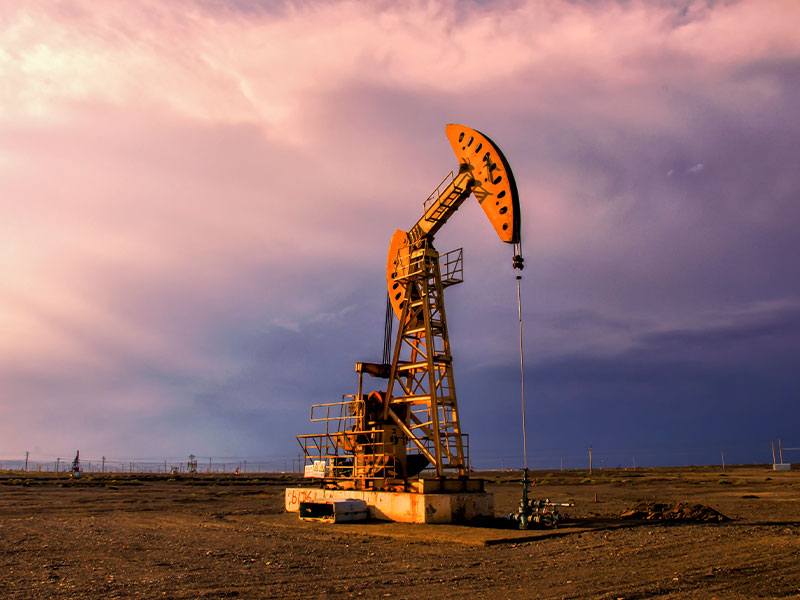
The oil drilling and production industry faces extreme operating conditions, including high temperatures (exceeding 200°C), high pressure (downhole pressure exceeding 140 MPa), severe corrosion (acidic environments containing H₂S and CO₂), high impact loads (drill bit vibration frequencies reaching 50 Hz) and long-term continuous operation (over 300 days per well). Thanks to their self-aligning capability, high radial load-carrying capacity and contamination-resistant design, self-aligning roller bearings have become the ‘hinge components’ of core equipment such as drilling rigs, mud pumps and top drive systems. This article systematically elaborates on their core value in the oil and gas drilling sector from three perspectives: application scenarios, technical suitability and typical case studies.
Core Application Scenarios and Technical Suitability
Drilling Rig Rotary Table and Main Bearing System: The ‘Power Hub’ of Drilling Operations
Application Areas: Rotary table main bearings, derrick bearings, and travelling block bearings.
Operational Challenges:
Withstanding the weight of the drill string (up to 300 tonnes) and the impact loads generated by the drill bit breaking through rock (instantaneous loads exceeding 500 kN).
Downhole drilling fluid (containing sand particles and chemical additives) is prone to entering the bearings, leading to accelerated wear.
Operating in open-air environments with significant temperature fluctuations (–40°C to 50°C), requiring adaptation to thermal expansion and contraction.
Bearing Solutions:
High-seal-integrity self-aligning roller bearings: Featuring dual-layer labyrinth seals + V-shaped rubber seals, with a dust and water resistance rating of IP67 to prevent drilling fluid ingress.
Special materials and surface treatments: The bearing steel undergoes carburising and quenching (surface hardness HRC ≥ 62), whilst the raceways are hard-chromium plated (0.05 mm thick), tripling wear resistance; cooling grooves are added to the outer ring, working in conjunction with a forced lubrication system to reduce the risk of thermal failure under high-temperature conditions.
Self-aligning compensation: Allows for ±1.5° misalignment of the shaft system caused by installation errors or downhole vibrations, thereby preventing stress concentration at the edges.
Case study: Following the adoption of optimised 241 series bearings in the rotary table of a certain onshore drilling rig, service life was extended from 6 months to 18 months, with maintenance costs per well reduced by 40%.
Mud pump drive end: The ‘heart support’ of high-pressure circulation
Application Areas: :Crankshaft bearings, connecting rod bearings, crosshead bearings.
Operating Challenges:
Subject to pulsating loads from high-pressure mud (pressures up to 70 MPa), the bearings must withstand high-frequency impacts (20–50 Hz).
The mud contains solid particles (5%–10% by volume), which can easily cause abrasive wear.
Continuous operation results in significant temperature rise (bearing housing temperatures can reach 120°C).
Bearing Solutions:
Impact-resistant self-aligning roller bearings: Optimised contact angle between rollers and raceways (25°–30°), increasing load capacity by 40% under combined loads; utilises a split carbon steel cage with 20% increased thickness to prevent fracture under high-frequency impacts.
Wear-resistant coating technology: The roller surfaces are sprayed with a tungsten carbide (WC) coating (0.1 mm thick), achieving a hardness of HRC ≥70, which improves resistance to abrasive wear by a factor of five.
Forced lubrication and cooling: The outer ring is designed with annular oil grooves, combined with an independent oil supply system (flow rate ≥50 L/min), to ensure lubricant circulation and cooling.
Case Study: Following the adoption of coated bearings in a mud pump on a marine drilling platform, bearing service life was extended from 3 months to 12 months, reducing annual downtime by 200 hours.