How much do you know about the applications of self-aligning roller bearings
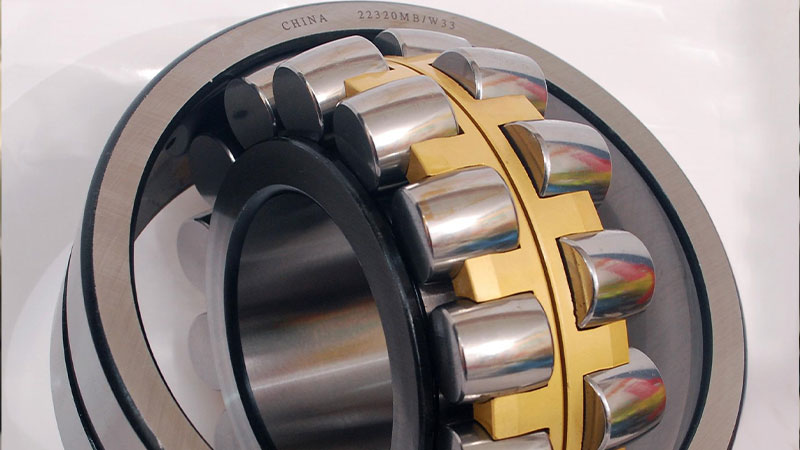
Self-aligning roller bearings are bearings in which cylindrical rollers are mounted between an inner ring with two raceways and an outer ring with spherical raceways. As the centre of curvature of the outer ring raceway coincides with the centre of the bearing, they possess the same self-aligning capability as self-aligning ball bearings. They can automatically adjust when the shaft or housing is subject to deflection, without increasing the load on the bearing. Self-aligning roller bearings can withstand radial loads and axial loads in two directions. They have a high radial load capacity and are suitable for applications involving heavy loads and impact loads.
Bearings with a tapered bore in the inner ring can be mounted directly. Alternatively, they can be mounted on cylindrical shafts using a locking collar or a mounting sleeve. Cages are available in stamped steel, moulded polyamide and turned copper alloy varieties. Self-aligning roller bearings can withstand substantial radial loads whilst also accommodating a certain degree of axial load. The outer ring raceway of this type of bearing is spherical in shape, giving it self-aligning properties; the bearing remains operational even when the shaft is subjected to bending or tilting forces causing the centreline of the inner ring to deviate from that of the outer ring by no more than 1° to 2.5°.
Self-aligning roller bearings are available with either cylindrical or tapered inner bores. The taper of the tapered inner bore is 1:12 or 1:30. To enhance the bearing’s lubrication performance, annular oil grooves and three evenly spaced oil holes are machined into the outer ring.
Self-aligning roller bearings are suitable for withstanding heavy and impact loads. They are widely used in the metallurgy, rolling mill, mining, petroleum, paper, cement and sugar refining industries, and are an indispensable type of bearing in the mechanical engineering sector.