Maintenance Guide for Self-aligning Roller Bearings: Key Points for Ensuring Efficient Equipment Operation
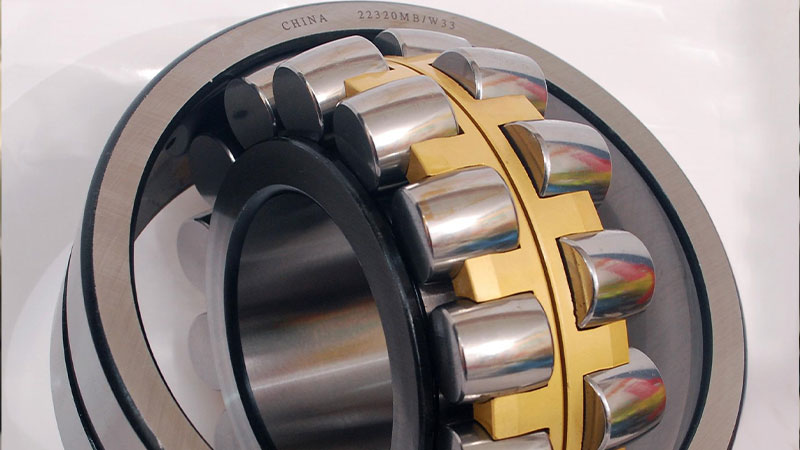
Thanks to their excellent self-aligning capability, self-aligning roller bearings can compensate for installation errors and shaft deflection, making them widely used in heavy-duty and complex operating conditions such as mining machinery and metallurgical equipment. To ensure stable performance and extend service life, scientific and reasonable maintenance is crucial. The following outlines key maintenance points covering installation, lubrication, operational monitoring and periodic inspections.
Precise Installation: Laying a Solid Foundation for Operation
Pre-installation Preparation
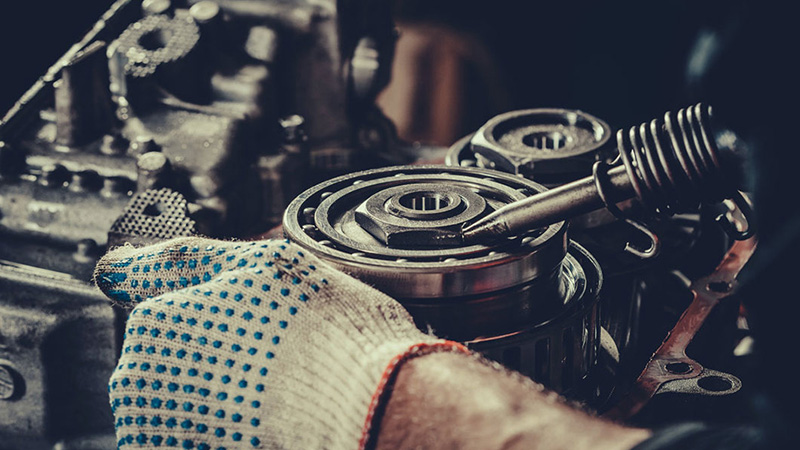
Prior to installation, the bearing, shaft and bearing housing must be thoroughly cleaned to remove contaminants such as oil and metal shavings. This prevents foreign matter from entering the bearing during installation, which could cause wear or seizure. At the same time, carefully inspect the dimensional accuracy, surface roughness and geometric tolerances of the bearing, shaft and bearing housing to ensure that the clearance between components meets design requirements. For example, the roundness error of the shaft should be controlled within a reasonable range to avoid uneven loads on the bearing caused by shaft ovality.
Selection of Installation Methods
Select an appropriate installation method based on the bearing size and equipment structure. For small bearings, the cold mounting method may be used, employing specialised tools to press the bearing evenly onto the shaft. Ensure that the direction of force is perpendicular to the axis to avoid damage to the bearing raceways caused by skewed installation. For large bearings or those used in high-temperature conditions, the hot-fitting method is recommended. Heat the bearing to an appropriate temperature (generally 80–100°C above ambient temperature) to utilise the principle of thermal expansion, causing the inner ring to expand, and then quickly fit it onto the shaft. During heating, ensure the bearing is heated uniformly; induction heaters or oil bath heating may be used to avoid localised overheating that could affect bearing performance.
Post-installation Inspection
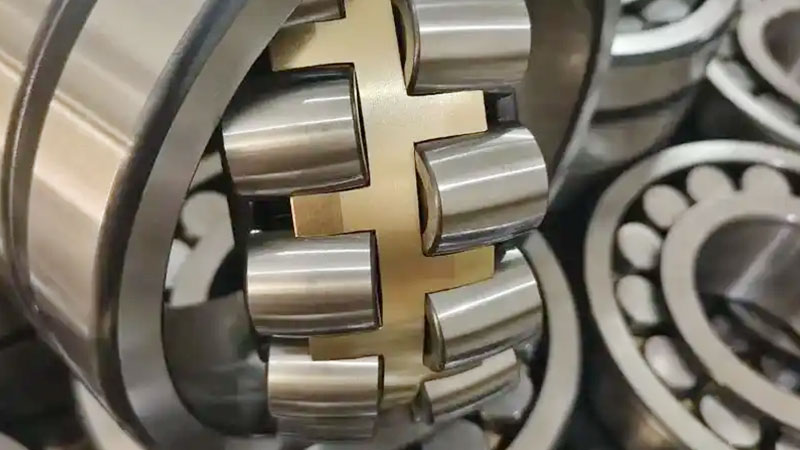
Once installation is complete, check the bearing’s rotational smoothness by turning it by hand; it should rotate smoothly without any sticking or binding. At the same time, measure the bearing’s clearance to ensure it falls within the specified range. Excessive clearance will cause significant vibration and noise during operation, reducing the bearing’s precision and service life; insufficient clearance, on the other hand, will increase friction, cause severe overheating, and may even lead to seizure.
Proper Lubrication to Reduce Friction and Wear
Lubricant Selection
Select an appropriate lubricant based on the bearing’s operating conditions, such as speed, load and temperature. Under heavy-load, low-speed conditions, it is advisable to use a grease with a higher viscosity, such as lithium-based grease, which possesses excellent extreme-pressure and anti-wear properties as well as mechanical stability, effectively reducing friction and wear between the bearing rollers and raceways. Under high-speed, high-temperature conditions, synthetic lubricating oils with lower viscosity, such as polyalphaolefin (PAO) synthetic oils, should be selected. These possess excellent oxidation resistance and thermal stability, maintaining a low viscosity at high temperatures to provide effective lubrication for the bearings.
Determining the Lubrication Method
Common lubrication methods include oil bath lubrication, drip lubrication, spray lubrication and grease lubrication. For self-aligning roller bearings operating at low speeds under heavy loads, grease lubrication is suitable; it is advisable to fill the internal cavity of the bearing to between one-third and one-half of its capacity. Excessive or insufficient grease will affect the lubrication performance of the bearing. For high-speed, high-temperature bearings, oil lubrication is recommended, such as oil spray lubrication, where lubricating oil is sprayed into the bearing interior through a nozzle at a specific pressure and flow rate to form a continuous oil film, effectively reducing bearing temperature and minimising wear.
Lubrication Interval Planning
Establish a reasonable lubrication interval based on the bearing’s operating conditions and environment. Under normal operating conditions, grease-lubricated bearings generally require a grease change every 3,000 to 5,000 hours of operation; for oil-lubricated bearings, the oil level and quality must be checked regularly, and the lubricating oil replaced promptly in accordance with changes in oil quality. In harsh operating conditions, such as high-temperature or dusty environments, the lubrication interval should be appropriately shortened to ensure the bearings remain in a well-lubricated state at all times.