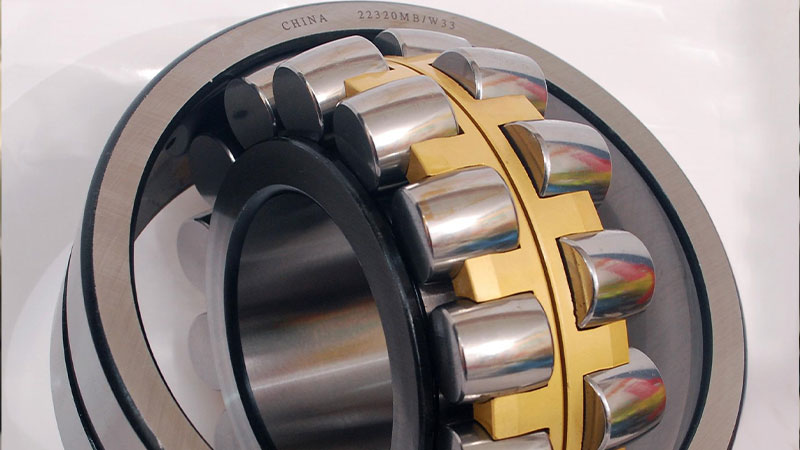
Analysis of the Causes of Damage to Self-aligning Roller Bearings and Solutions
I. Improper Installation
1. Using excessive force during installation, such as striking the bearing (Type 35 self-aligning roller bearing) directly with a hammer, causes the most damage to the bearing; this is the primary cause of deformation.
2. Incomplete installation, misalignment, or failure to seat the bearing fully results in excessive bearing clearance. If the inner and outer rings are not aligned with the same rotational centre, this leads to misalignment.
Recommendation: Select appropriate or specialist bearing installation tools, and use dedicated instruments to inspect the bearing after installation.
II. Inadequate Lubrication
Surveys indicate that inadequate lubrication is one of the primary causes of premature bearing failure. Key factors include: failure to replenish lubricant or grease in a timely manner; insufficient application of lubricant or grease; inappropriate selection of lubricant or grease; and incorrect lubrication methods, amongst others.
Recommendation: Select the correct lubricant or grease and use the correct lubrication method.
III. Fatigue
Fatigue failure is a common form of bearing damage. Common causes of fatigue failure may include: long-term operation of the bearing under excessive loads; failure to carry out maintenance in a timely manner; improper maintenance; and ageing of the equipment.
Recommendation: Select the appropriate bearing type and replace fatigued bearings regularly and in a timely manner.
IV. Contamination
Contamination can also lead to premature bearing failure. Contamination refers to the ingress of sand, dust, metal shavings, etc., into the bearing interior. The main causes include: opening the bearing packaging too early prior to use, resulting in contamination; a dirty working environment during installation, resulting in contamination; a dirty operating environment for the bearing; and contamination of the working medium, etc.